
LEADERSHIP QUOTE:
"It ain't about how hard you hit, it's about how hard you can get hit and keep moving forward." Sylvester Stallone
A LITTLE BIT DEEPER:
We just finished a month long look at The Five Dysfunctions of a Team that you can read on the blog. I hope that during these weeks, it's triggered some things in you and your leadership. Again, one of my all-time favorite books.
I'm going to make a slight turn here, well, maybe a radical turn.
In 1976 a movie came out that my dad took me to. It was Rocky.
I had never seen a movie like that before but I remember it like it was yesterday. The movie was dark, it was about boxing (which I know nothing about), but it was inspiring! So inspiring that the morning after seeing that film as a 12 year-old, I ate my 5 raw eggs and committed to doing one-handed pushups every day. Of course that lasted about 2 days, but the impact was real.
Before I go on, some of you might be wondering why my dad would take a 12-year old to see that movie? Well, my dad and I are both easily inspired by sports dramas, we love the fight for survival, and we love a story that seems impossible but always turns out in the end. We suckers for that emotional ride, and I was hooked.
Rocky was a story of determination and someone overcoming impossible obstacles.
The reason this has come to mind is because Sylvester Stallone just published an autobiography called The Steps. It's basically his story of growing up and it leads up to his writing and pitching his film, Rocky. I started reading the book last week, then I switched to the AUDIBLE version because I wanted to hear his voice tell his story.
It's a rough story, but I'm learning that what was shared on the screen in his film Rocky was based on the challenges and hardships he faced growing up and trying to make it in the film business.
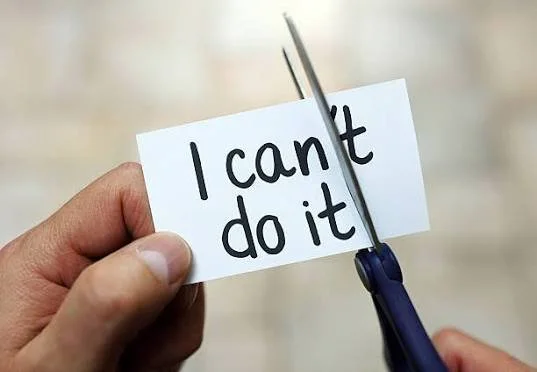
I'm not eating raw eggs again, but I'd love to spend some time talking about how determination is so important to our leadership. Yes, there are some prompts from the Rocky story, but what engaging with this story does for me is simply to remind me of why determination is so important to my leadership, to anyones leadership!
Back in 2001, my dad and I wrote a little book called The ABC's of Global Leadership. It's a simple curriculum going through 26 Qualities of a Leader using the ABC's. We've shared it in the Leader Mundial Communities and it's been translated into 9 different languages.
When we wrote this, we chose DETERMINED as a quality that every leader needs to have and continue to develop. We wrote these words...
"When we're not determined, we wonder.
When we're not determined, we get distracted.
When we're not determined, we don't finish well.
When we're not determined, we tire easily.
When we're not determined, we can't see clearly.
When we're not determined, we forget."
I believe these words are still true for us all.
Can you remember a time that sheer determination helped you get through a difficult time or season? What was that like to go through?

LEADERSHIP QUOTE:
"The ultimate dysfunction is inattention to results. Great teams put the success of the whole above individual recognition." Patrick Lencioni
A LITTLE BIT DEEPER:
We're looking at the each of the dysfunctions that Lencioni describes in his book, The Five Dysfunctions of a Team.
We looked at TRUST the first week, then we looked at the FEAR OF CONFLICT then COMMITMENT. Last week we looked at ACCOUNTABILITY and today we'll finish be talking about RESULTS.
We've done a quick walk through The Five Dysfunctions of a Team from Patrick Lencioni and I hope this has pushed you to dig deeper into the book.
His approach to results really made sense to me but I wish I had learned that years earlier!
My first job as a Youth Pastor back in the 80's was at a large church in Los Angeles. I was 21 years old, I hadn't been trained in youth ministry, but somehow I landed this job and was in way over my head.
I was invited to attend the Deacon & Elder Meeting and was encouraged to simply observe and learn how church leadership functioned.
I remember at that first meeting, no one mentioned the youth ministry of the church. They talked about everything else, but nothing was said about the Youth Group. I then set out to make myself known to the leadership of the church.
I became louder, I wanted to share my opinions about everything, I felt that I needed to defend everything that I was doing, and I got more and more frustrated because no one seemed to care.
Finally one of the Deacons pulled me aside and asked me why I was so frustrated, and I shared that it felt that no one cared about the youth group. No one was asking me questions, no one seemed interested, and no one seemed to value what I was spending my time and energy doing.
He looked at me and said this: "Russ, we're not talking about it because it seems to be going really well. The Deacons and Elders are working on things that affect the whole church and they're not concerned about the Youth Ministry because they believe in you and trust you."
Again, had I understood Lencioni's definition of results at the time it would have helped me understand this.
I was focused on MY AREA, MY ISSUES, MY JOB. I didn't understand that I also had a role with the whole church. My role was to see the church impact peoples lives, and the Youth Ministry was just one small part of that.
I began to understand this, but I'm sure I kept rolling my eyes at the meetings, I kept trying to be seen and I was always promoting what I was doing, but over time I learned to let the results speak for themselves and it wasn't my job to prove my worth to everyone.
Later in life I became much less selfish and looked at the big picture, not just my part of that.
This is what Lencioni is talking about with RESULTS.
The reasons people don't embrace the shared goals and results they're all working for is because as leaders, we're trying to:
Protect our Status. We want to look good and we want to be recognized for what we do.
Promote our Area. We want to operate in our own silo, ensuring that our area is getting attention first, then we'll look at the bigger goals.
We spend so much time taking care of ourselves that we forget that we're a part of something much bigger.
Oh to go back in time, but I'm so thankful to that leader for speaking truth to me. What I wish he would of said is "Russ, it's not about you!" It took some more years for me to finally learn that.
Think of a time that you were focused on protecting yourself so much that you forgot about the larger vision, the bigger picture. How do you feel about that today?

LEADERSHIP QUOTE:
"Failing to hold someone accountable is ultimately an act of selfishness." Patrick Lencioni
A LITTLE BIT DEEPER:
We're looking at the each of the dysfunctions that Lencioni describes in his book, The Five Dysfunctions of a Team.
We looked at TRUST the first week, then we looked at the FEAR OF CONFLICT. Last week we talked about COMMITMENT. We're working through all five dysfunctions this month and identifying some areas we might need to pay special attention.
Today we're talking about ACCOUNTABILITY and we have one more dysfunction to look at next week.
I remember a lesson on accountability very clearly. I was a church custodian as a 14-year old and my father was the Pastor. I assumed the job would be fairly easy in that my dad was my boss, and it really didn't take much to clean the church.
I would clean every Saturday Morning, then I would show up early on Sunday to dust and make sure everything was good.
A few weeks into my working career my dad showed up early on Sunday and he walked around the church with me and identified some areas that I had failed to clean. I had missed some spots with the vacuum, I hadn't dusted the piano very well, and there was trash blown in from the street on the patio. These are all things he had asked me to do, but either I just didn't do them, or I didn't do them well.
Remember, I assumed the job would be easy and thought I could just get it done quickly. What I learned was that there were some really clear expectations of me in order to earn that 100 Sucre (yes, a fortune at that time in Ecuador) paycheck. Not only was I given the expectations, but I was held to that standard.
I'm not sure I was ever a great custodian (ask my mother about my bedroom), but I learned how to do what was expected of me. I learned a lesson in accountability and learned how to ensure that my Dad, the Pastor, wouldn't find my work unfinished or not done well.
Accountability is simply my willingness to accept responsibility to do what I say I'll do or what I agree to do.
In the case of my church job, accountability happened when my "boss" checked to see that I was doing what I had agreed to do to the standard that was expected.
When did the word ACCOUNTABILITY become a negative term? Why do we so often push against it?

LEADERSHIP QUOTE:
"Commitment is a function of two things: clarity and buy-in." Patrick Lencioni
A LITTLE BIT DEEPER:
We're looking at the each of the dysfunctions that Lencioni describes in his book, The Five Dysfunctions of a Team.
We looked at TRUST the first week, then last week looked at the FEAR OF CONFLICT We're working through all five dysfunctions this month and identifying some areas we might need to pay special attention.
I'm assuming this is a refresh, but I'm still surprised by the number of people I run into who have never walked through Lencioni's Five Dysfunctions Model. If you're one of them, stop reading my summaries and read his book. It's worth the read!
I love this quote on commitment because it's so simple, yet as a leader, I can't count the number of times I asked people to COMMIT without having the clarity around the project defined and without giving people the opportunity to BUY-IN.
LACK OF COMMITMENT is Lencioni's third dysfunction.
Years ago a good friend invited me to serve on his Board. I responded quickly by saying yes, then I asked some questions about expectations and what value he thought I could bring to the Board. His reply was simply to come and engage and then we'd work that all out.
I attended my very first Board Meeting, and we were all challenged to do some things for the organization that surprised me. They wanted me to donate financially a specific amount, they wanted me to commit to raise funds, and they wanted me to take a specific role in a capital campaign.
I was surprised at the expectations, and at the first break of the meeting, I pulled my friend aside, who was the President, and asked him why he hadn't shared these expectations with me earlier. He simply replied, "If I had shared these with you earlier, you wouldn't have joined the Board."
My response: I resigned at the end of that first day of meeting, and I'm sure I was the shortest serving Board Member in that organizations history. My reason for resigning was that I wasn't given the opportunity to AGREE to what was happening, but had been expected to just follow along.
Lessons learned:
If someone asks me to serve, I ask many more questions today than I did before, even when the request comes from a friend.
While I can't know everything, due diligence is really important so that I can make an informed decision.
After asking questions, doing the due diligence, I'm then able to commit and buy-in to what I've been invited into.
If there's any questions or concerns, I don't just move forward, but I address those head-on and work towards clarity first, then I respond.
Do you have any stories like mine where you made a decision without having all the needed information? What was the result of that?

LEADERSHIP QUOTE:
"When there is trust, conflict becomes nothing but the pursuit of truth, an attempt to find the best possible answer." Patrick Lencioni
A LITTLE BIT DEEPER:
We're looking at the each of the dysfunctions that Lencioni describes in his book, The Five Dysfunctions of a Team.
Last week I started where Lencioni starts... TRUST. His entire model is built with trust at the foundation, and he says again and again, "if you have trust, then you can...."
He challenges us over and over again to build that solid foundation of trust, which we described last week as being connected to vulnerability.
You'll need that solid foundation, because the next dysfunction he looks at is FEAR OF CONFLICT.
In the book, Lencioni describes different kinds of conflict and explains different ways people approach it. I think the most valuable thing he does is he breaks the common belief that "conflict is bad".
If I ask a room full of leaders how many are comfortable with conflict vs. how many avoid it, it always lands in the 80-20 ratio. Most people avoid it, but there are some who are comfortable with it.
Lencioni, the quote above, describes conflict as "the pursuit of truth". He goes on to say that a meeting without conflict is an unnecessary meeting.
He describes ways in which conflict helps us find truth, helps us argue and disagree rationally, and talks about the value that comes when people passionately share their views and opinions.
In another book he says that "meetings without conflict is boring".
I don't know about that.
I'm not afraid of conflict, but I don't always welcome it. I've learned a lot over the years of what my tolerance is and how to allow the right amount.
There's a tipping point when conflict can move quickly from a "healthy conflict" into a "mean-spirited personal attack". I've seen this happen, and this does damage to the team, to the organization and to the leader.
Years ago, while engaged in a deep conflict, I learned the lesson that you can disagree, you can discuss passionately, and you can call someone out for their behavior, but then you can continue in your relationship and move on.... IF YOU HAVE A FOUNDATION OF TRUST!
What's your personal tolerance for conflict? Think about how you approach this at work, at home, at church, in your community?

LEADERSHIP QUOTE:
"If you could get all the people in an organization rowing in the same direction, you could dominate any industry, in any market, against any competition, at any time." Patrick Lencioni
A LITTLE BIT DEEPER:
I led a short workshop for a local non-profit team this week, so I spent some time revisiting a workshop I've shared over the years from one of my favorite Patrick Lencioni books, The Five Dysfunctions of a Team.
I remember the first time I read this book back in 2002 and I immediately tried to put it's principles into play in the organization I was running at the time as well as 2 Boards I was serving with and leading.
Lencioni talks about 5 things that high functioning teams have to address and it was so practical, it immediately made a difference in the way I was leading. Of course, it's taken another 25 years of practice, failure and then trying again, but I can honestly say that this book had a huge impact on my personal leadership and on every organization I've been a part of since.
This month, I'm just going to share some thoughts from this book, but I encourage you: If you haven't read it, GET IT AND READ IT. If you have read it, PICK IT UP AGAIN AND REFRESH. If it's sitting on your shelf and you flipped through a couple of pages, I challenge you to STOP AND READ IT.
Lencioni builds his entire model on a foundation of TRUST. He talks about how important it is to build trust but then to maintain trust over time.
He talks about the quickest way to build trust being VULNERABILITY. He actually wrote a book that he titled, GETTING NAKED (which got a lot of attention), but the entire book is about the importance of vulnerability in leadership.
In this book, Lencioni identifies 3 reasons why people in leadership aren't vulnerable and real:
First, THE LEADER FEARS LOSING BUSINESS. We're afraid that if we show our real selves, they won't like what they see and they'll go someplace else. We live with this constant fear.
Second, THE LEADER FEARS BEING EMBARRASSED. We worry about what people think so we want to project something that is often not what is real! We don't want people to see any weakness in us!
Thirst, THE LEADER FEARS FEELING INFERIOR. We are the leader and we like it when our team puts us up on a pedestal to some degree. Humbling ourselves might make us look less qualified.
We buy into these lies, and Lencioni argues that the opposite is usually true.
When we show our true selves, people are drawn to us.
When we show our weaknesses, we become much more relatable.
When we're not afraid of being embarrassed, we take more risks and often show more of our true leadership.
Which one of these three is something you have dealt with as a leader?

LEADERSHIP QUOTE:
"Motivation is what gets you started. Habit is what keeps you going. Jim Rohn
A LITTLE BIT DEEPER:
This is the final post addressing Motivation.
You can read the other posts this month HERE if you missed them.
I'm going to actually give you 2 quotes today, I'll close with one of my favorites...
We've been talking about some different things that might motivate us... we've talk about others, we've talk about God's voice in our life, and we've talked about our own voice.
Motivation is tricky because it will constantly be changing based on the task before you or the goal you're aiming for.
One time in High School, our Basketball Coach gave us a workout plan to do over Christmas Break in preparation for the start of the new season. I went into the break ready to work out every day, but quickly that motivation was lost when I saw the waves of the ocean, tasted the shrimp at our favorite beach spot, and somehow that motivation was lost on me until the day before school started when I finally got through the workout plan one time.
It's the same way with my teeth. If I have a cleaning coming up, I'm even more disciplined in my flossing. I'm motivated to attack these gums, then the day after the cleaning I relax back into a normal routine of flossing.
Motivation provides the SPARK to do something, but as the quote says, it often requires healthy habits to keep moving forward, especially when that motivation slows down, or when we get distracted by something else.
I want to encourage you to take some time to identify the motivating things in your life...
When my kids and grandkids are coming over, I'm motivated to clean the yard and be ready for them.
When I'm feeling tired, I'm motivated to change my eating, sleeping and movement activity because I know this affects my energy.
When my wife asks me to do something, I'm motivated to respond and act in love because I want to please her.
When I'm distracted, I need to figure out what's going on in my mind and heart and address that before finding a way to focus.
When I'm stressed out I need to look at the big picture of what I'm doing and remind myself of my purpose and my passion.
Identifying our Motivation helps us to act!
What is it that regularly motivates you to action?

LEADERSHIP QUOTE:
"Be the change you wish to see in the world." *Mahatma Ghandi
A LITTLE BIT DEEPER:
We're continuing to explore MOTIVATION this month by looking at some quotes and simply drawing some personal application.
*While this quote is often attributed to Ghandi, there is no reliable record of him saying this, however it aligns deeply with his writings and posture.
Last week I shared some thoughts around motivation and I shared a story of when I had been motivated by others to climb a mountain, and then I pondered the idea of motivation that comes from Jesus' invitation to simple "come to Him". You can read that HERE if you missed it.
This quote is something that I think about often.
Years ago, I can't even remember how long ago, Gina gave me a small metal paper weight with this quote inscribed in it. She gave it to me when I had finished my graduate studies, and it was simply an encouragement to me to invest my life in bringing change to the world.

LEADERSHIP QUOTE:
"I'm a success today because I had a friend who believed in me and I didn't have the heart to let him down." *Abraham Lincoln
A LITTLE BIT DEEPER:
We're continuing to explore MOTIVATION this month by looking at some quotes and simply drawing some personal application.
*This quote is most often attributed to Abraham Lincoln, but it's also been connected to Benjamin Franklin.
When I read this quote, I thought about motivation and realized that often I'm motivated to do things because of other peoples expectations for my life and work.
This isn't bad, and that idea of "not letting others down" is really important, but it can also lead you to do things you don't really want to or don't need to do.
My dad joined our Boy Scout Troupe back when I was 11 years old to climb Mt. Whitney in California. I don't think I had any idea what I was getting into. I thought me and a bunch of my friends were going camping, and that sounded like fun. My dad knew what climbing a 14,505 foot mountain was about because he had climbed it before. This peak is the highest point in the lower 48 states. He joined the trip to help me make it to the top.
Yes it was bad. Switchback trails straight up the front of the mountain for hours, and I've told this story before, my dad just kept telling me to take 10 more steps, then take a break. We inched our way up the mountain and eventually made it.
The motivation for me? Not letting my dad down, and reaching the summit. That motivation kept me moving and led to a moment at the top of celebration, which then turned into a rapid descent to get back to life at a reasonable altitude.
I would have never made it up that mountain had I not been carrying the expectation and the hope from my dad that I could actually do it.
That's motivation. The positive kind.
There's also another kind, the kind that comes with guilt.
I've said "YES" to so many things over the years because I didn't want to let people down, or because I thought that I was supposed to do something. Sometimes this has forced me to let down the people I care about the most in my attempt to make others happy or to meet their often unrealistic expectations.
Think about your story.
How has the idea of "letting people down" motivated you to do certain things been a positive thing or a negative thing?
Contact
➤ LOCATION
777 Nameless Ave.
New York, NY 00000
☎ CONTACT
placeholder@example.com
(212) 555-0110
Areas of Practice
MUSIC
The world of music is ever growing and evolving, and we’re not just talking about sound trends. With the consistent introduction of varying revenue streams and distribution channels, the opportunity for profit grows, but so does the complexity. That’s where we come in.
ART LITIGATION
Demystifying art law is in itself a creative practice. It requires finesse, strategic structuring, and in many ways, empathy. At the end of the day, art and its worth are profoundly personal. That’s why we advise mediation or arbitration before stepping into litigation.
TELEVISION, FILM, & THEATRE
The way people consume entertainment is constantly in flux, so the laws must adapt quickly. Harris Ingram strives to anticipate these changes so you can focus more on creating the performance of a lifetime.
BUSINESS STRATEGY
The startup and small business marketplace is still a new and fierce frontier that requires legal advice from attorneys who are deeply entrenched in the particularities of venture financing. Our firm gives you an holistic approach, so your company can get the best competitive advantage.
DIGITAL MEDIA & TECHNOLOGY
The internet, software, and technology are so pervasive that we can’t remember having ever lived without them. They make our lives simpler, but behind the curtain are fluctuating challenges in protection and monetization—challenges that our firm stays two steps ahead of.
FASHION, APPAREL & TEXTILE LAW
Fashion law is a little bit like the Wild West. There’s a lot of potential, but the rules can seem convoluted and vague at best. Protecting a brand or even a single design involves intellectual property, copyrights, trademarks, and patents.
“We must all obey the great law of change. It is the most powerful law of nature.”
Let's Chat.
Use the form below to contact us regarding your legal enquiry. Please be as detailed as possible. Include your industry along with any specific document requests. To help us best service your enquiry, we recommend that you first describe the issue you’re having before telling us what you want to achieve. You may also email or call us to make an appointment.
For job opportunities, please email us your resume. We’re always looking for new and exceptional talent to lead the firm into uncharted fields of practice.
LEADERSHIP QUOTE:
"I believe any success in life is made by going into an area with a blind, furious optimism." Sylvester Stallone
A LITTLE BIT DEEPER:
I'm going to continue some quotes from Sylvester Stallone this month simply as a way to prompt some deeper thinking.
I finished his book The Steps this past week. It's his early story of growing up, and it ends with him winning the Oscar for Best Picture in 1977 for Rocky. The journey to get there was long, somewhat dark, but a true story of perseverance!
In this quote, he focuses on three words, and I think there's something there for us. "Blind - Furious - Optimism". This is what this says to me:
BLIND:
Stallone says over and over, "don't let the odds stop you", even when things look bleak, don't focus on your chance of failure, don't be "blind" to the opportunities around you, don't be careless. Stallone worked for years and years writing, re-writing, learning and failing before he wrote the screenplay for Rocky in just 3 days. He worked hard to get to this point, especially as everyone around him told him he'd never succeed.
FURIOUS:
This idea from Stallone is about intensity. He would say you have to bring an aggressive effort to everything you do, willing to work hard, willing to fight for what you believe in. This isn't a passive hope that things will work out, but a relentless pursuit of something you believe in.
OPTIMISM:
Stallone defines this as "believing in the outcome before there's evidence for it." Belief comes first, the results follow.
I don't know about you, but these three words are really challenging to me today. I'm doing a little self-audit to see how these words are currently playing out in my life and I'm challenged, but I'm also inspired.
Stallone's personal story and journey describe what these words meant to him, and I guess I need to determine what they mean to me.
It seems at times that I am OK simply rolling through life, through work, through relationships, through challenges with a lack of intensity, a lack of focus and I can easily get lulled to just "cruise" by the steady state of the calendar that just keeps moving forward, one project, one event at a time.
That's not what I want or how I want to live.
What would my life reflect if I was a little more BLIND to the obstacles facing me, and I saw a vision of what could be?
What would my next project look like if I applied some FURIOUS energy to it, putting all my effort into it instead of just a little bit?
How would I lead if instead of a general toxic sense of OPTIMISM, I truly believed in the vision and purpose before it actually became a reaility?
Cue the Rocky theme HERE.
Do you find yourself drifting to sleep at a time when you should be fully engaged, completely focused and excited about what you're doing and who your called to be?